The concept of Kamadhatu Rupadhatu Arupadhatu Borobudur explains much of the monument’s spiritual design. Borobudur represents more than impressive stone architecture. Its different levels guide visitors through three realms in Buddhist cosmology. Each realm reflects a stage in the journey from worldly desire toward spiritual freedom.
What Are the Three Realms of Borobudur?
UNESCO divides Borobudur into three symbolic spheres: Kamadhatu, Rupadhatu, and Arupadhatu. The temple’s architecture changes as visitors move through these levels.
Kamadhatu represents the realm of desire. Rupadhatu represents the realm of form. Arupadhatu represents the formless realm.
These three sections create one continuous spiritual journey. The design becomes more open and visually simple as visitors move higher.
Kamadhatu: The Realm of Desire
Kamadhatu forms the lowest symbolic level of Borobudur. It represents human existence under the influence of desire, attachment, and worldly actions.
The hidden foot contains Karmawibhangga reliefs. These carvings illustrate actions and their consequences. They help explain the Buddhist principle of karma through scenes of human behavior.
Kamadhatu therefore introduces the spiritual journey from everyday life. It reminds visitors that choices can create consequences and shape future experiences.
Rupadhatu: The Realm of Form
Rupadhatu begins above the base and covers five square terraces. This realm represents a stage where people move beyond strong worldly desires. However, form and identity still remain.
The architecture reflects that condition. Visitors walk through structured galleries filled with relief panels and Buddha images. These carvings present Buddhist stories, teachings, and moral lessons.
Walking around the galleries forms an important part of the experience. Visitors encounter visual stories before climbing toward the next stage.
You can learn more about the monument through our guide to important facts about Borobudur Temple. It explores the temple’s history, architecture, Buddhist meaning, and unique features.
Arupadhatu: The Formless Realm
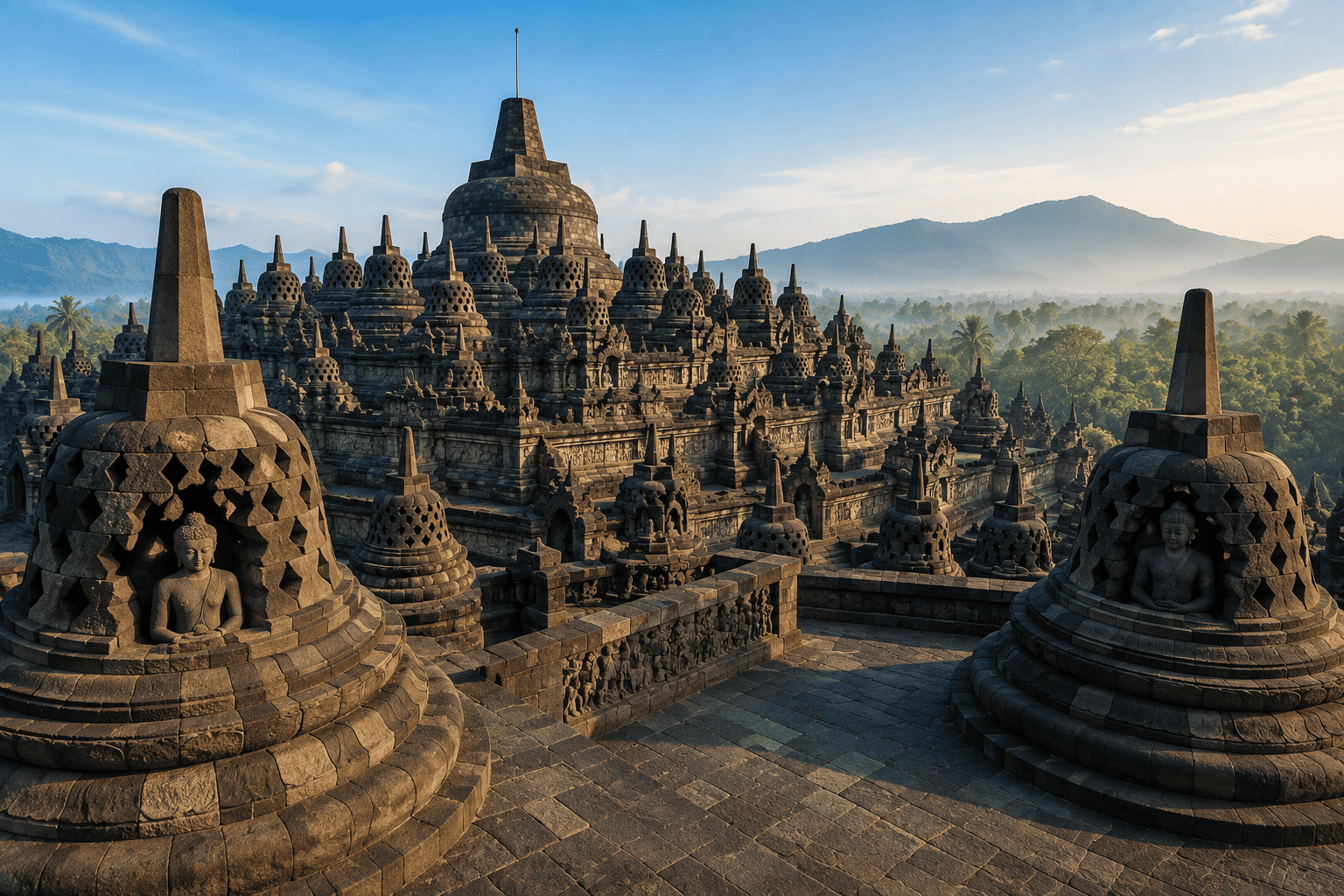
Arupadhatu creates a major visual change. Three circular platforms replace the square galleries below. The detailed reliefs disappear, while open space and stupas dominate the view.
UNESCO records 72 openwork stupas across these circular terraces. Each one contains a Buddha image. A large central stupa stands at the highest point of Borobudur.
The simpler environment reflects the idea of formlessness. Visitors leave the detailed world of images and stories behind as they move upward.
Why Does the Journey Move Upward?
Borobudur connects physical movement with spiritual development. Visitors begin among detailed reliefs and structured galleries. They gradually reach quieter and more open terraces.
This transition gives the architecture symbolic purpose. The monument moves from desire through form and finally toward formlessness.
Understanding this journey also helps visitors appreciate why each section looks different. The changing architecture supports Buddhist philosophy rather than serving only as decoration.
Experience the Three Realms at Borobudur
Take time to explore each level instead of heading directly toward the upper stupas. Notice how the spaces, carvings, and shapes change along the route.
A knowledgeable guide can explain these details during your visit. Travelers who want easier planning can explore a private Borobudur tour from Yogyakarta. A guided trip can connect the temple’s architecture with the ideas behind each spiritual realm.
Conclusion
Kamadhatu Rupadhatu Arupadhatu Borobudur describes a symbolic journey through three stages of Buddhist cosmology. Kamadhatu represents desire, Rupadhatu represents form, and Arupadhatu represents formlessness.
Together, these realms transform Borobudur into a spiritual path expressed through stone and movement. Understanding them can make every level of the monument more meaningful during your visit.